Registry of registries: one catalog when every AI platform brings its own
Microsoft, Google and AWS each have their own agent registry, MCP servers have theirs and Skills sit in Git. A registry of registries reads them all into one catalog, with an owner on every entry.
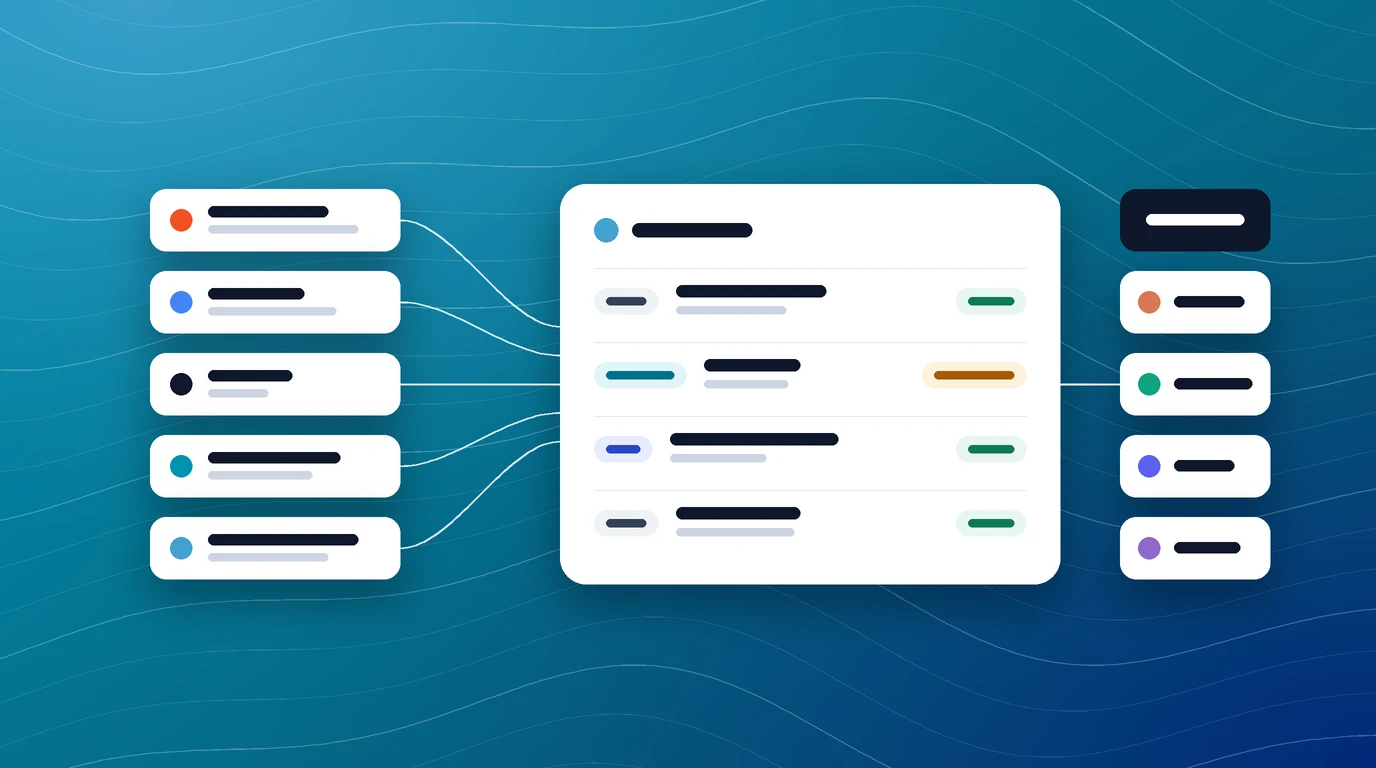
Ask a large company how many AI agents it runs and you will usually get a different number from every team you ask. That is not because people are careless. It is because the answer lives in several places, and each place only knows its own part.
This post explains why that happened, why adding another registry does not fix it, and what we mean when we say Palma is a registry of registries.
Every platform now ships its own registry
The large AI platforms now each have a registry of their own:
- Microsoft keeps agent identities in Entra Agent ID and its agent registry in Agent 365.
- Google keeps them in Agent Registry, for Gemini Enterprise.
- AWS added an Agent Registry to Bedrock AgentCore.
- The official MCP registry lists public MCP servers, and companies run private registries next to it.
- Skills, the playbooks AI assistants follow, usually sit in Git repositories, one per team, with a copy in each assistant.
Each of these registries is good at its own job. None of them answers for the others.
Take a company on two clouds, with Copilot agents, Skills in Git and MCP servers exposed through its API gateways. It ends up with several lists. Each list has its own idea of what an agent is, its own owners and its own rules. Every new platform adds one more.
Five questions no single registry answers for the others
When we talk to enterprise architecture and central AI platform teams, the same five questions come up. They are simple to ask and hard to answer across platforms.
- What do we have? Every agent, MCP server and Skill, from every source.
- Who owns it? A named owner on every entry, and a human sponsor on every agent.
- Who may use it, and what may it do?
- What did it do? One record of every action, whichever registry the entry came from.
- What does it cost? Spend per agent and team, counted against the same list.
Every platform answers these for itself. The work is answering them across all of them.
Why one more registry does not fix it
The obvious reaction is to build or buy a new central catalog and ask every team to move their agents into it. In practice that becomes one more list to maintain. The agents are still born in Copilot Studio or Gemini Enterprise, the Skills are still edited in Git, and the central list is out of date a week after it was filled in.
A registry of registries takes the other route. It reads the registries a company already runs and turns them into one catalog. Nothing moves. Where something has no registry at all, you register it directly.
It helps to put the three kinds next to each other.
| A vendor's agent registry | A private MCP registry | A registry of registries | |
|---|---|---|---|
| What it lists | That vendor's agents, sometimes others' | Approved MCP servers | Agents, MCP servers and Skills from every source |
| Where entries come from | That vendor's platform | Curated by hand or copied from the public registry | Read from the registries you run, or registered directly |
| Owner on every entry | Varies | Varies | Required |
| Does listing grant access? | Often yes, inside that platform | Often yes | No. Access needs an approval. |
| Who gets access | Users of that platform | Developers who point their tools at it | Each employee, by identity group, in every assistant |
| Where it ends | In the list | In the list | In delivery: approved capabilities reach people's AI assistants |
Listed is not allowed
The row that matters most in that table is the fourth one. In many registries, being listed is close to being usable. Someone finds an entry, points a tool at it and starts working.
That is fine for a small catalog a team curates by hand. It is a problem once the list is filled automatically from several sources. If discovery grants access, every new source you connect widens what your agents can reach, and nobody decided that.
A registry entry is not a decision. In a registry of registries, entries arrive with zero access. Each one needs an owner and an approval before anyone can use it.
The same care applies when a source changes. If an endpoint moves, nothing should follow it without the owner agreeing. If a registry suddenly returns nothing, that should be treated as an outage, not as an instruction to delete everything.
Ten questions to ask every agent platform before it lands
The cheapest moment to sort this out is before the next AI platform arrives. Hand a short list like this to procurement. The answers are cheap to get now and expensive to get later.
- Can it list all its agents through an API?
- Does every agent keep a stable ID?
- Does every agent have a known owner?
- Does it signal when an agent is retired?
- Does every agent record its model and version?
- Can you add your own fields, such as use case or AI Act risk class?
- Can approvals run in a set order, for example security, then data protection, then the business?
- Can you search agents by team, use case and technology?
- Can you export the list, the activity and the cost per agent?
- Does it speak the open formats: the MCP registry API, A2A Agent Cards, ARD and AI Catalog?
Ten agents are easy to keep track of. Three hundred, built by people who have since moved to other teams, are not. The questions above are what make the difference later.
The open formats do most of the work
None of this needs a new standard. The formats already exist.
- MCP registry API. The official MCP registry was designed as a base that public and private registries build on. Any registry that speaks the same API can be read the same way.
- A2A Agent Cards. An agent describes itself and its skills in a card that other systems can read.
- ARD and AI Catalog. Google's Agentic Resource Discovery spec and the AI Catalog format let any provider publish what it offers on its own domain, for registries to find and index.
A registry of registries should read these formats, not invent new ones.
How we built it in Palma
Palma is a registry of registries for agents, MCP servers and Skills. It works in four steps.
Connect. Palma reads Microsoft Entra Agent ID and Copilot Studio, Google Agent Registry and Gemini Enterprise, GitHub, and the official MCP registry or any private registry that speaks its API. It also reads SAP Agent Gateway, A2A Agent Cards and AI Catalog sources. Anything else, you register directly.
Own. Every entry has a named owner, and every agent has a human sponsor. No owner, no access.
Decide. Entries arrive with zero access. Your identity groups decide who gets what, and rules check what an agent is about to do.
Deliver. Approved capabilities reach each employee through one connector, in 18 AI assistants. Every call through Palma is recorded with three names: the human, the agent and the app.
Palma only reads your registries and never writes to them. It runs in Frankfurt or in your own infrastructure.
This also covers the AI register many companies still keep in a spreadsheet. Each agent carries its model and version, use case, DPIA status and AI Act risk class, and the register can be exported for an auditor. It stays current because it is fed from the sources, not typed in by hand.
Where to start
You do not have to decide everything on day one. The first step is read-only: connect the registries you have and look at the catalog. Nothing changes for any user.
From there you assign owners, see which agents are running without being registered, and approve what should reach people. Rules, human approvals and audit come on top of that.
If you already standardise on Microsoft Agent 365 or Google Gemini Enterprise, keep doing that. Those registries stay the home of the agents built on their platforms. A registry of registries reads them and adds what sits outside them: your Skills, your MCP servers and the other assistants your teams use.
See every agent, MCP server and Skill you have
The registry of registries page shows how the catalog connects, who owns what and how approved capabilities reach people.
See how it connectsRead More
A Skill is only as good as its distribution
Every assistant vendor and MCP gateway now ships a Skills registry. A registry tells you what you have. It doesn't tell you whether a Skill reaches every assistant, still works, or has someone answerable for it.

One Connector, Every AI Client: Per-Client Integration Fails
The moment you run a second assistant or a second system, per-client integration turns into N times M work and N audit surfaces. Serving capability over MCP collapses it back to one governed layer.
Book a demo
See what governed AI agents look like.
A 20-minute demo on your stack. We'll show Palma working with the agents, tools and identity provider you already run.
- Enterprise security
- Role-based access
- Instant integration